
Putnam Scheduled and Actual Release
Missouri records use several dates that answer different questions. A minimum release date is the calculated conditional-release point for a sentence, subject to law and later changes. A presumptive parole release date is a tentative date assigned by the Parole Board, dependent on institutional behavior and an acceptable release plan. A maximum release date is the full-term endpoint. None is the same as an actual release date and time, which records a completed custody event.
Final discharge can come later than release from prison because parole or conditional release continues the sentence in the community. Earned compliance credit may affect that later end date for eligible supervision cases. For the Putnam County Detention Center, an actual release timestamp ends a local custody episode, but the destination matters. Transfer to MODOC or another agency is not release into the community.
| Missouri date | Meaning | What it cannot prove |
|---|---|---|
| Minimum release | Calculated minimum or conditional point | The exact gate date |
| Presumptive parole release | Tentative Board date subject to conditions | A final grant or completed release |
| Maximum release | Full-term sentence endpoint | That prison custody lasts until that day |
| Actual release | Completed exit from a named custody setting | Freedom from every other hold or supervision term |
| Final discharge | End of custody and supervision | The earlier prison or jail exit time |
Find a Putnam Release Date
Start by identifying the custody system. The Putnam County jail, MODOC, BOP, and ICE maintain separate records. A current jail roster covers people still held locally, not people already released. MODOC’s interactive search covers active prisoners, probationers, and parolees, but excludes fully discharged offenders. BOP and ICE should be used only when the custody chain shows a federal or immigration connection.
- Identify whether the person is pretrial, serving a county sentence, serving a Missouri prison sentence, or held by another agency.
- For a state sentence, search the MODOC Offender Web Search by full name or DOC number and match the cause number and sentencing county.
- Review every charge row in the MODOC Sunshine file for minimum and maximum dates, sentence length, and completed flags.
- For a local sentence, obtain the judgment, credited-custody facts, and Sheriff record, then confirm the calculation with the court clerk or detention staff.
- Confirm a past event through an actual release timestamp, DOC status or discharge record, and any documented transfer destination.
The MODOC search is active-status focused. A field-office assignment supports parole, probation, or another form of community supervision. An institution assignment supports continued prison custody. No interactive result does not prove that release happened on any date because discharged people are intentionally omitted. The historical nightly file includes current and former offenders back to roughly 1974 and is the stronger fallback after discharge.
For a named county-jail release and its booking record fields, the Putnam County release-record search gives the local verification chain. Keep the Sheriff timestamp separate from any later state discharge date.
Putnam Release Date Data Fields
MODOC’s downloadable file is charge-based, so one person may have many rows. Search by the lifelong DOC number and reconcile every charge before drawing a conclusion. One row marked completed does not prove that all sentences have ended. Match cause numbers and sentencing county to Case.net, and read the assigned location along with the dates.
| Field | Use in a release-date lookup | Caution |
|---|---|---|
| DOC number | Stable person-level match | Still verify the correct identity |
| Sentence minimum release date | Calculated minimum or conditional point | Not an actual release timestamp |
| Sentence maximum release date | Full-term endpoint | Community supervision may start earlier |
| Sentence completed flag | Shows completion for that row when marked Y | Reconcile all other charge rows |
| Assigned place | Distinguishes institution from field supervision | A field office does not mean final discharge |
| Court cause number | Links the sentence to its court case | Use the correct county and case |
Some values are data codes, not dates. The documented sentinel value 99999999 means life, 88888888 covers indeterminate or interstate cases, and 66666666 covers assessment or investigation. Do not convert one of these strings into a calendar day. If a field conflicts with the judgment or another charge row, ask the records custodian or assigned office to reconcile it.
The MODOC Sunshine and offender-data page describes current and former offender data and the records-custodian route:
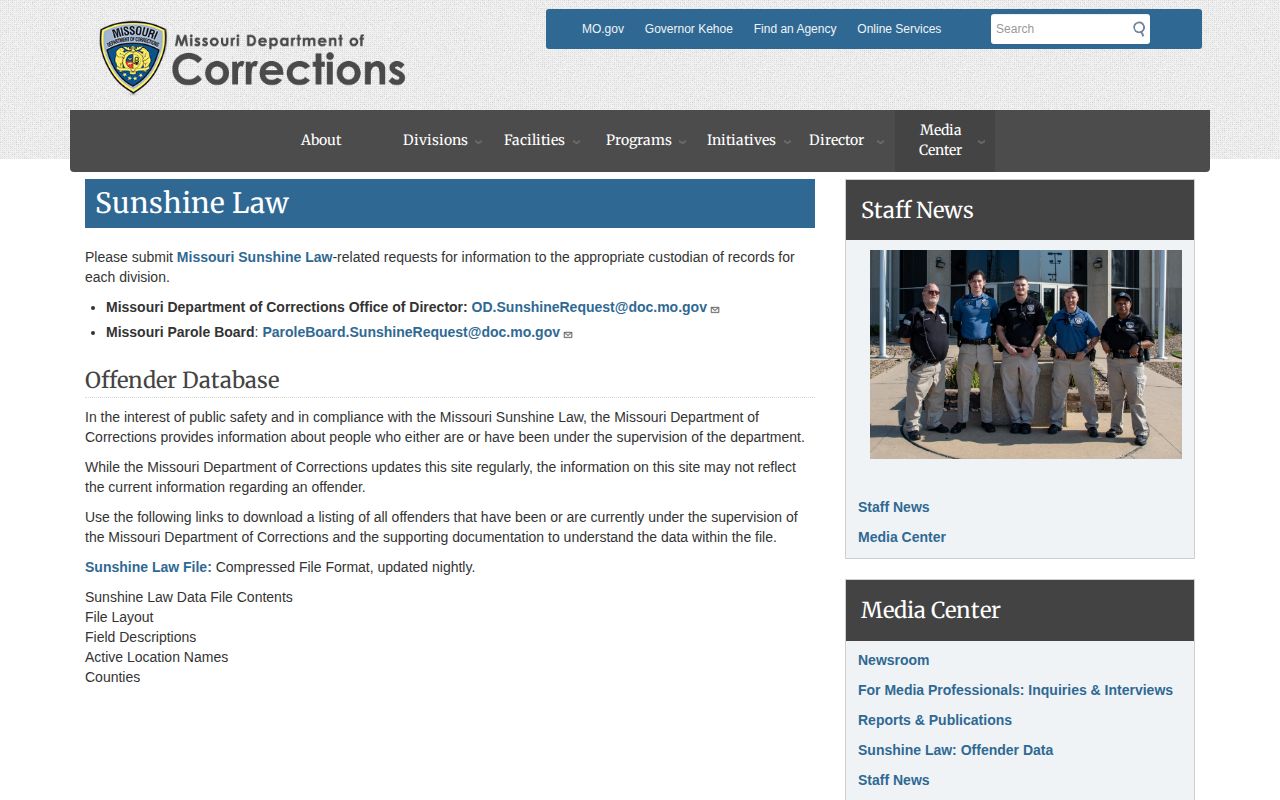
The historical data route is crucial after final discharge removes a person from the active interactive search.
Calculate Putnam State Release Dates
The state calculation begins with the judgment and sentence, not a simple online formula. Apply qualifying pre-sentence custody credit under RSMo 558.031. Determine whether the prison and conditional-release split in section 558.011 applies. Next ask whether section 558.019 imposes a minimum prison term. Account for consecutive sentences and Parole Board rules. Only then consider discretionary good time and any presumptive Board decision.
Under RSMo 558.011, many term-of-years felony sentences have both a prison portion and a conditional-release portion. For sentences of nine years or less, the conditional portion is generally one-third. For more than nine through fifteen years, it is generally three years. For terms over fifteen years, it is generally five years. Statutory exceptions apply, including dangerous felonies and some repeated DOC remands. The sentence may continue in the community even though confinement has ended.
That framework does not authorize a do-it-yourself gate-date calculation. Court credit, sentence structure, exclusions, consecutive terms, Board action, conduct, holds, and later orders can all affect the result. Read the official minimum and maximum fields, then confirm with the caseworker, field officer, Constituent Services, or custodian.
Note: A Missouri conditional-release term is still part of the sentence, even though the person is outside prison and supervised in the community.
Putnam Release Dates and Good Time
Missouri good time is not one fixed discount. Under RSMo 558.041, an institutional superintendent may recommend additional good time for an eligible DOC prisoner based on department policy, conduct, and program factors. The credit applies to the current sentence, has exclusions, and can be withheld or lost. The statute does not provide a universal public number of days per month.
For that reason, subtracting a set percentage from the sentence is unreliable. A disciplinary violation may also let the Board extend a conditional-release date under section 558.011. Earned compliance credit is different. It applies to eligible supervision cases after community release and may reduce the later supervision term. It does not establish when a prison gate opened.
Section 558.019 creates minimum terms in covered cases. A dangerous felony generally requires service of 85 percent before parole, conditional release, or another early release, subject to the statute’s provisions. That rule does not apply to every Missouri prisoner. Prior-commitment rules, amendments, offense categories, and exclusions make any blanket 85-percent claim false. Treat it as an eligibility floor in a covered case, not an automatic release date.
Why Putnam Release Dates Change
A projected date can move for reasons found in the sentence, corrections record, or custody chain. Some changes affect the earliest possible release. Others affect the final discharge. The most useful record states which event changed and which authority made the decision.
| Factor | Possible effect | Record to verify |
|---|---|---|
| Credited custody | Changes the calculated sentence endpoint | Judgment and official calculation |
| Consecutive sentences | Extends or restructures time to serve | Judgment and all MODOC charge rows |
| Good-time award or loss | May move an eligible prison date | MODOC calculation or custodian record |
| Dangerous-felony minimum | Can impose an 85 percent eligibility floor | Statute, offense, and sentence record |
| Parole Board action | May set, defer, adjust, or rescind a tentative date | Notice of Board Action |
| Detainer or transfer | Ends one custody episode but begins another | Release destination and receiving-agency record |
A court order can also change the legal basis for custody. Case.net may show a sentence, revocation, bond order, dismissal, or other event, but the docket does not certify the exact jail gate time. Use the Sheriff record for the local physical release and the state record for a Missouri prison or supervision event.
Putnam County Jail Release Dates
A pretrial detainee does not have a sentence-based projected release date. Bond, a court order, dismissal, a warrant, a hold, or transfer can control what happens next. For someone serving a county sentence, use the sentencing judgment, credited custody, the Putnam County Sheriff record, and the circuit clerk. MODOC prison percentages should not be applied to a local jail term.
No official Putnam-specific jail good-time rule, weekend-release policy, public release schedule, transport policy, or property procedure was found. That absence should remain clear. Call the Sheriff’s 24-hour number at 660-947-2515 when immediate confirmation matters, and ask whether the expected event is community release or transfer. For documentary proof, request the admission and release date and time, disposition or destination, and transfer record if one exists.
The Detention Center holds pretrial detainees, county-sentence inmates, people on P&P holds, people waiting for a state-prison or Community Corrections bed, municipal prisoners, and other-agency holds. That mix explains why disappearance from the current roster is not proof of freedom. The official 48-hour released view can supply a completed local timestamp, but the destination still must be checked.
Three Putnam Release Dates Differ
Missouri’s minimum, presumptive parole, and maximum dates are easy to confuse. The MODOC glossary defines each as a distinct milestone. Minimum release is a calculated conditional point. Presumptive parole release is tentative and depends on conduct and an acceptable plan. Maximum release marks the full term. A fourth fact, the actual release timestamp, must come from a completed custody record.
The Board may extend conditional release after a violation and hearing. Good time may be recommended, withheld, or lost without any universal public formula. A presumptive date may be approved, adjusted, canceled, or followed by later reconsideration. These state-specific rules are why a single projected field must never be presented as confirmed release.
The captured Missouri glossary view shows the official date and supervision vocabulary:
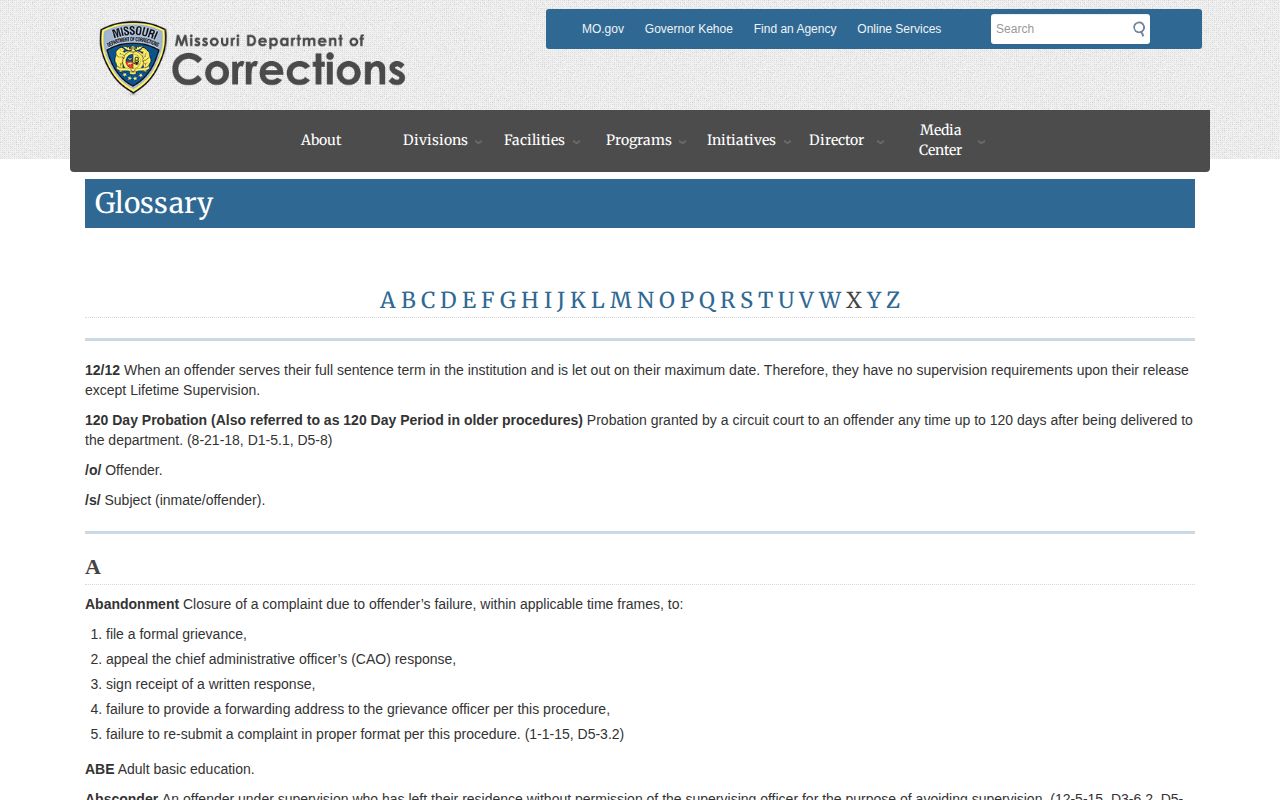
Use those terms as written, then record the actual agency event separately. This distinctive date split prevents a tentative Board milestone from being mistaken for a past release.
Confirm Putnam County Release Dates
Past local release should be confirmed through the Sheriff’s release timestamp and any release or transfer note. A court judgment adds the legal context. For a state prison release, use MODOC status, assigned place, date fields, and the historical file when the active search no longer returns the person. A completed flag applies to one charge row, so inspect every row tied to the DOC number before describing final discharge.
For a pending custody change, Missouri notification tools can add an alert but not replace the final record. Local jail and court registrations use VINELink or MOVANS. State DOC custody notifications go through DOC Victim Services. Since May 5, 2026, current MOVANS delivery uses SMS and email rather than voice calls or app alerts. The Putnam County VINE inmate check explains the agency match and current registration route.
A narrow MODOC Sunshine request should name the person, DOC number or date of birth, cause number, and date range. Ask for the release or discharge date and type, completed-sentence flag, assigned field office, and releasable Board action. Missouri’s three-business-day rule governs the initial agency response or delay explanation, not guaranteed production of all records by that date.
Note: Record an actual release only after the holding agency supplies a positive timestamp or status and the custody destination has been resolved.